
Have you ever thought about starting your own brand but are not sure about where to start? Whether you want to introduce a skincare range, launch haircare products or build a brand around herbal beauty and personal care, the cosmetic industry offer many opportunities for new entrepreneurs in India.
Seasons Healthcare understands that turning a business idea into a successful cosmetic brand includes many important decisions. As a cosmetic manufacturing company offering private label and third-party manufacturing solutions, we help businesses explore product development and manufacturing option without having to establish their own production facilities.
Our product range cover skincare, haircare, men’s grooming, baby care, colour cosmetics and other personal care categories. We also focus on research and development, formulation support and quality-oriented manufacturing practices to help businesses develop their product ranges. So if you are planning to establish your own cosmetic brand, let’s walk through important steps to help you get started. For more information, you can call 98722-19010 or email info@seasonshealthcare.org.
Understand the Cosmetic Business Model Before You Start
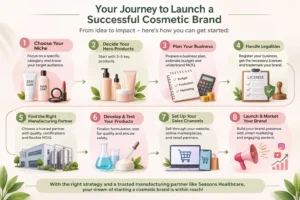
Before investing in your business, it is very important to know how cosmetic manufacturing actually works. Generally, there are three option:
- Own Manufacturing: You establish your own manufacturing facility, purchase machinery, hire employees, arrange raw materials and manage production. Although this gives you greater control, it require significant investment and operational expertise.
- Third-Party Manufacturing: You collaborate with an established manufacturer who produces cosmetic products according to your requirements. You can concentrate on branding, distribution and sales while the manufacturing partner manages production.
- Private Label Manufacturing: With private label manufacturing, you select existing or customisable formulations and sell the finished products under your own brand name.
For someone who is starting a cosmetic business, private label and third-party manufacturing can be convenient option. You can explore our contract manufacturing solutions and compare different cosmetic manufacturing companies in India before making any decision.
1. Choose Your Cosmetic Niche and Target Customers
Once you understand the manufacturing models, the next step is choosing your product category. Rather than introducing too many unrelated products, we recommend starting with a specific category. This will help you understand your audience, identify market demand and create a consistent brand identity. Some popular cosmetic categories include:
- Skincare: Face washes, moisturisers, serums, cleansers, and sunscreens.
- Haircare: Shampoos, conditioners, hair oils, and hair masks.
- Colour Cosmetics: Foundations, lipsticks, concealers, and other makeup products.
- Men’s Grooming: Beard oils, face washes, moisturisers, and grooming essentials.
- Herbal and Ayurvedic Cosmetics: Beauty and personal care products based on herbal ingredients.
- Baby Care: Gentle skincare and personal care products for babies.
You can explore different opportunities through the Skin Care Range,Hair Care Range, and Colour Cosmetics Range. After choosing your category, identify your ideal customers. Consider their age group, skincare concerns, purchasing habits, preferred price range and shopping preferences.
2. Decide Your Hero Products and Start Small
One common mistake new entrepreneurs make is launching too many products at once. Managing multiple products require more investment, inventory, packaging and marketing. A better approach is to begin with three to five products or even one hero product. For example, a new skincare brand could start with:
- Face wash for daily cleansing: choose from Foaming Face Wash, Gel Face Wash or Cream Cleanser.
- Face serum for specific skincare concerns: options include Vitamin C Serum, Niacinamide Serum and Hyaluronic Acid Serum.
- Moisturiser for everyday hydration: consider Gel Moisturiser, Face Cream or Day Moisturiser SPF 30.
- Sunscreen for sun protection: explore Sunscreen SPF 50+, Matte Sunscreen or Mineral Sunscreen.
If you’re interested in skincare manufacturing, explore face wash manufacturers and face serum manufacturing options. For a haircare brand, you could begin with shampoo and conditioner by exploring private label shampoo manufacturing.
Other possibilities include body lotion manufacturing and products from the Sun Protection Range. The objective is to introduce a manageable product range, understand customer preferences, and expand when your business starts gaining traction.
3. Build a Business Plan and Decide Your Budget
Before contacting manufacturers, prepare a basic business plan and estimate your initial investment. Your startup expenses may include:
- Product manufacturing and formulation.
- Packaging, bottles, labels, and cartons.
- Product testing and quality checks.
- Business registration and trademark expenses.
- Website development and branding.
- Digital marketing and promotions.
- Inventory, shipping, and operational expenses.
The investment will depend on your product category, manufacturing quantity, packaging choices, and marketing strategy.
Understand Your Product Pricing
Suppose your manufacturing and packaging cost for one cosmetic product is ₹120 and you decide to keep its MRP at ₹399.
| Particulars | Example Amount |
| Manufacturing and packaging cost | ₹120 |
| Maximum retail price | ₹399 |
| Seliing price after discount | ₹349 |
| Remaining amount before other expenses | ₹229 |
Remember that ₹229 is not your actual profit. You must also consider shipping, applicable taxes, marketplace commissions, advertising, returns and other expenses.
Understand Minimum Order Quantity
MOQ stands for Minimum Order Quantity. It refers to the minimum number of units a manufacturer require you to order. For a startup, choosing a manufacturer with flexible MOQ option can help control inventory expenses and test customer demand before investing in larger production batches.
You can contact Seasons Healthcare to discuss available manufacturing quantities and product requirements.
4. Register Your Business and Understand Legal Requirements
Once your business plan is ready, take care of the necessary registrations and regulatory requirements.
Business Registration: Choose a suitable business structure depending on your business goals. Common option include:
- Sole Proprietorship.
- Limited Liability Partnership (LLP).
- Private Limited Company.
You should also understand GST registration requirements based on your business activities and applicable tax rules.
Trademark Registration: Your brand name and logo represent your business identity. Before finalising them, search existing trademarks to avoid conflicts with established brands. Consider registering your trademark to protect your brand identity.
Cosmetics Manufacturing Regulations: Businesses must pay attention to applicable manufacturing licences, product quality standards, safety requirements and labelling regulations. If you’re using third-party manufacturing, verify that your manufacturing partner holds the required licence. Also you must clarify responsibilities relating to product documentation, packaging, labelling, and compliance.
At Seasons Healthcare, you can explore our certifications and Quality Management System to learn more about our quality-related practices. Always verify current requirements through official regulatory sources such as CDSCO before launching your products.
5. Find the Right Cosmetic Manufacturing Partner
Choosing the right manufacturing partner is one of the most important decisions when starting a cosmetic brand. Do not select a company simply because it offers the lowest quotation. Product quality, reliability, documentation and manufacturing capabilities matter equally. Before finalising a manufacturer you should consider the following:
- Certifications: Check relevant GMP, ISO and other applicable quality certifications.
- Research and Development: Understand whether the company can develop or customise formulations.
- Product Samples: Request samples before approving bulk production.
- MOQ: Confirm that the minimum order quantity suits your budget.
- Packaging Support: Check whether the manufacturer provide packaging assistance.
- Production Timeline: Understand sampling, manufacturing and delivery schedules.
- Written Agreement: Discuss pricing, product specifications, quality expectations and delivery terms.
Seasons Healthcare provide manufacturing-related support for businesses interested in developing their own cosmetic product ranges. You can explore our manufacturing capabilities to learn more about the services and production support available.
You can also compare manufacturers across different locations. For example, if you are exploring suppliers in northern India, take a look at our pages about cosmetic manufacturers in Delhi, Ludhiana and Baddi.
6. Finalise Formulation, Sampling, and Product Testing
After selecting your manufacturing partner you should focus on product development. You generally have two option: choose a ready-to-brand formulation or request a customised formulation.
Ready-to-brand formulations can help you launch faster while customised formulations provides more opportunities to develop a distinctive product. Before approving production, request samples and evaluate their:
- Texture and consistency.
- Fragrance and colour.
- Application and overall feel.
- Packaging compatibility.
- Product performance and suitability.
You should also discuss appropriate stability, microbiological and safety testing with your manufacturer. These checks helps assess product quality, shelf life and suitability for the intended use.
To understand how research and product development contribute to cosmetic manufacturing you should explore our innovation capabilities to learn more about our approach.
7. Set Up Your Sales Channels
After manufacturing and packaging you should decide how customers will purchase your products. You can start with one or two sales channels and gradually expand your business.
Your Own Website: Create a professional e-commerce website using platforms such as Shopify or WooCommerce. This gives you greater control over branding, promotions and customer experience.
Online Marketplaces: Platforms such as Amazon, Flipkart, Nykaa and Meesho can help you reach customers who are already shopping for beauty and personal care products.
Offline Distribution: Connect with cosmetic retailers, salons, wholesalers and distributors to expand your physical presence.
International Markets: Once your business becomes established, explore export opportunities after understanding the applicable regulations and documentation.
If you are exploring business expansion opportunities, you can learn more about our e-commerce support, dealership networking and export services.
8. Launch and Market Your Cosmetic Brand
Even a high-quality cosmetic product need effective marketing to attract customers. Your marketing activities should begin before the actual launch. Start by creating social media accounts and sharing content about your brand, product development, ingredients and upcoming launch. You can also:
- Build an email or WhatsApp waiting list.
- Collaborate with relevant micro-influencers.
- Introduce attractive launch offer and product bundles.
- Encourage genuine customer reviews.
- Share customer-generated content.
- Invest in search engine optimisation.
- Develop strategies to encourage repeat purchases.
After launching, regularly collect customer feedback and identify areas where your products or services can improve. You should remember that building a successful cosmetic brand takes time. Focus on product quality, customer satisfaction, and consistent marketing rather than expecting immediate results.
Why Choose Seasons Healthcare as Your Manufacturing Partner?

Finding the right manufacturing partner can make the process of launching your cosmetic brand easier.
Seasons Healthcare offer private label and third-party manufacturing services for businesses interested in developing their own cosmetic product ranges.
Whether you are planning to introduce a skincare range, expand into haircare or explore personal care products, our team can help you understand the available manufacturing options. To learn more about our company, services and manufacturing approach, you can visit our About Us page.
If you are planning to launch your own cosmetic brand, connect with Seasons Healthcare to discuss your product category, formulation requirements, packaging preferences and manufacturing options. Contact our team to take the next step towards developing your cosmetic brand.
FAQs About How Can I Start My Own Cosmetic Brand
1. How much does it cost to start a cosmetic brand in India?
The investment depend on product quantity, formulation, packaging, branding and marketing. Starting with a small product range and using third-party manufacturing can helps control initial expenses.
2. Do I need a manufacturing licence to sell cosmetics under my brand?
If you outsource manufacturing, the manufacturing facility must holds the applicable licence. Your business may also have additional compliance obligations depending on its activities and business model.
3. What is private label cosmetics?
Private label cosmetics are products manufactured by another company and sold under your own brand name. You can select existing formulations or explore customised product development.
4. What is the minimum order quantity for starting a cosmetic line?
The minimum order quantity varies depending on the manufacturer, product category, formulation and packaging. Some manufacturers offer flexible quantities and smaller batches for startups.
5. Can I start a cosmetic brand with just one product?
Yes. Starting with one hero product is a practical way to test customer demand, understand purchasing behaviour and build brand awareness before expanding your product range.
6. How long does it take to launch a cosmetic brand?
The timeline depend on formulation, sampling, testing, packaging, regulatory checks and production schedules. Custom formulations may require additional development time.